
Solidarity Kitchen (Cozinha Solidária)
Food, care and solidarity to protect life and strengthen families.
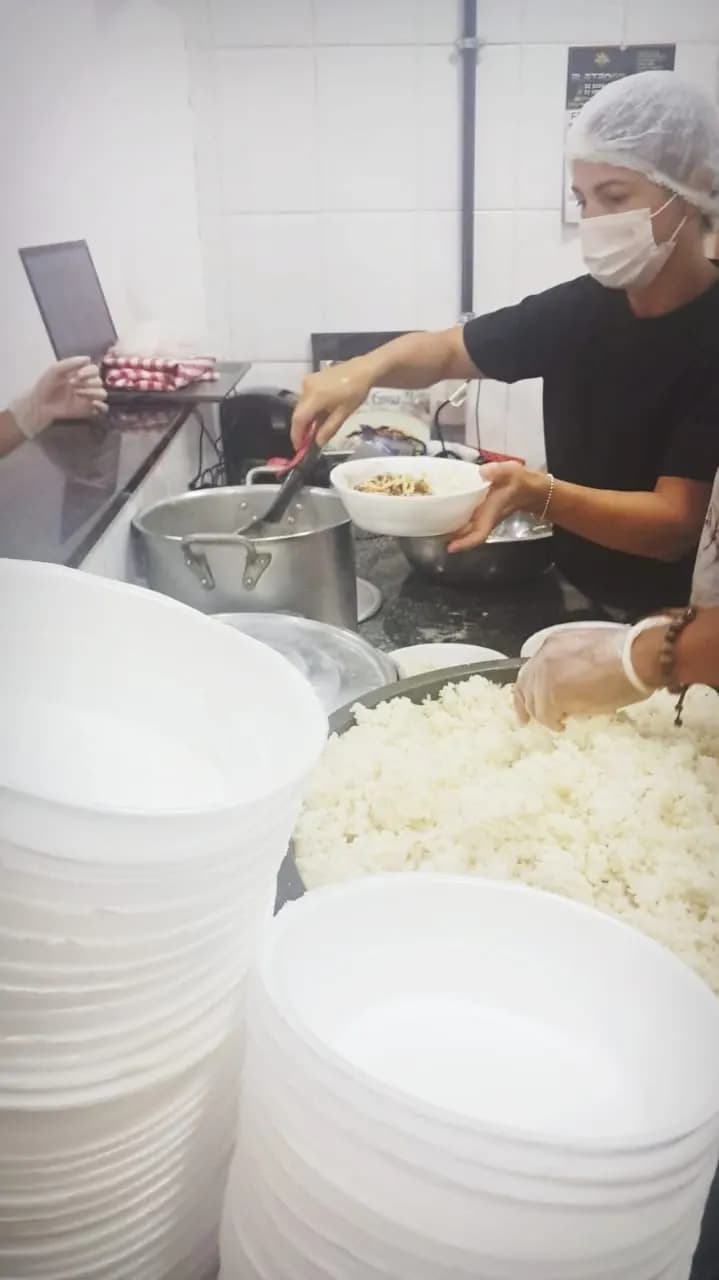
Our Solidarity Kitchen
The Solidarity Kitchen of the Associação de Apoio à Primeira Infância São José (AAPI-SJ — St. Joseph Early Childhood Support Association), accredited by the Federal Government of Brazil, works to fight hunger and promote food and nutrition security for children and families in situations of social vulnerability. As a concrete expression of our institutional mission to love and protect, it offers food, welcome and support to those who need it most.
From Wednesday to Saturday, we serve breakfast, fruit time for the children, lunch and afternoon snack. On Saturdays, families also receive take-home meal boxes. In addition, every activity of the Serviço de Convivência e Fortalecimento de Vínculos (SCFV, a community and family bonding service) includes a snack, so that food is present in our moments of fellowship, learning and strengthening of family bonds.
The Solidarity Kitchen serves more than 56 families and 150 people, with an average of about 120 meals a day, 480 a week and 1,920 a month. Its work also includes distributing food baskets to families who need food assistance. Between February and August 2026, 201 food baskets were delivered, helping to reduce food insecurity and strengthen the social protection of the families we serve.
- families served
- people served
- meals a day
- meals a month
Solidarity in action during the disaster in Juiz de Fora
During the disaster caused by heavy rains in Juiz de Fora, the AAPI-SJ Solidarity Kitchen mobilized staff, volunteers, partners and civil society to help the affected families and to support the teams working in the emergency, including the Juiz de Fora Fire Department. More than 1,200 meals were served to people left homeless, in an effort to care for people who had suffered material losses, were left without food and, in some cases, lost family members and their own homes.
The meals were prepared with care and in compliance with health regulations, packed in properly labeled meal boxes and sent to the affected neighborhoods, with logistical support from the City Government, which picked up the meals for distribution. Our staff and volunteers also lovingly prepared fruit salads and chocolate cakes.
This effort was made possible by the generosity of civil society, which contributed donations via PIX (Brazil's instant payment system) to buy food, including meat. AAPI-SJ also received the donation of an industrial stove and had the support of the Good Truck group and of Brasil, through donations of cooking gas and volunteers who helped prepare meals on a large scale.
Even after the official emergency period ended, the association continued to provide meals for another 20 days to the volunteers and workers at the donation warehouse connected to Roberta Lopes, then a city councilwoman and now a state representative.
It was intense work, requiring organization, collective effort and daily dedication, but it was also deeply rewarding. In a time of grief and loss, the Solidarity Kitchen brought more than food: it brought care, presence, solidarity and hope to our brothers and sisters in Juiz de Fora.
The Federal Government's Solidarity Kitchen Program
The Cozinha Solidária (Solidarity Kitchen) Program, established by Law No. 14,628/2023 and regulated by Decree No. 11,937/2024, aims to provide free, quality meals to the population, preferably to people in situations of vulnerability and social risk, including people experiencing homelessness and food and nutrition insecurity.
What are Solidarity Kitchens?
Solidarity kitchens are a social technology for fighting hunger, defined as an organized civil-society initiative to produce and offer free meals to groups facing socioeconomic vulnerability and food insecurity, including people experiencing homelessness. A solidarity kitchen runs on a voluntary basis, bringing together the efforts of the community. Its resources come from partner donations or individual donations.
Each solidarity kitchen is self-managed and carries out other activities of collective interest, such as training workshops, among others. They are usually located in vulnerable areas, in strategic places for providing meals.
What are Managing Entities?
A private nonprofit organization, accredited by Brazil's Ministry of Social Development (MDS), that carries out the Solidarity Kitchen Program either directly, by producing and offering meals in its own facility, or indirectly, by supporting other solidarity kitchens with the funds transferred to it.
Types of support offered by the program
- Support for providing meals through managing entitiesSupplementary financial support for providing meals to the Program's priority public, which may be used to cover operating, staff and maintenance costs and small investments.
- Supply of fresh and minimally processed foodsSupplying solidarity kitchens with healthy food from the Programa de Aquisição de Alimentos (PAA, Brazil's Food Acquisition Program), Conab (Brazil's National Supply Company) or through agreements with states and municipalities.
- Training for staff and volunteersSupport for training projects of collective interest, aimed at improving how solidarity kitchens operate.
Help keep the stove burning
Meat, cooking oil and cooking gas are the most urgent items for the meals served every day at our headquarters.
See what to donateMake a donation →